Among the moving boxes, Marta found a soft-cover notebook, stained with grease and full of cramped handwriting. It was her grandmother Lúcia's. On the page marked with a paper clip it said: Sunday sauce.
“Salt until it's good,” André read over her shoulder. “A little parsley. Cook until it smells like home.” He looked at Marta and smiled. “Is that a recipe?”
The Notebook in the Drawer
Marta hadn't made that sauce since her grandmother passed. She was afraid it wouldn't come out the same, and that the difference would hurt. But André had already gone to fetch the garlic, the onion and the tins of tomato left over from the move.
“We'll get it wrong together,” he said. “If it isn't good, we'll still have had the conversation.”
Salt Until It's Good
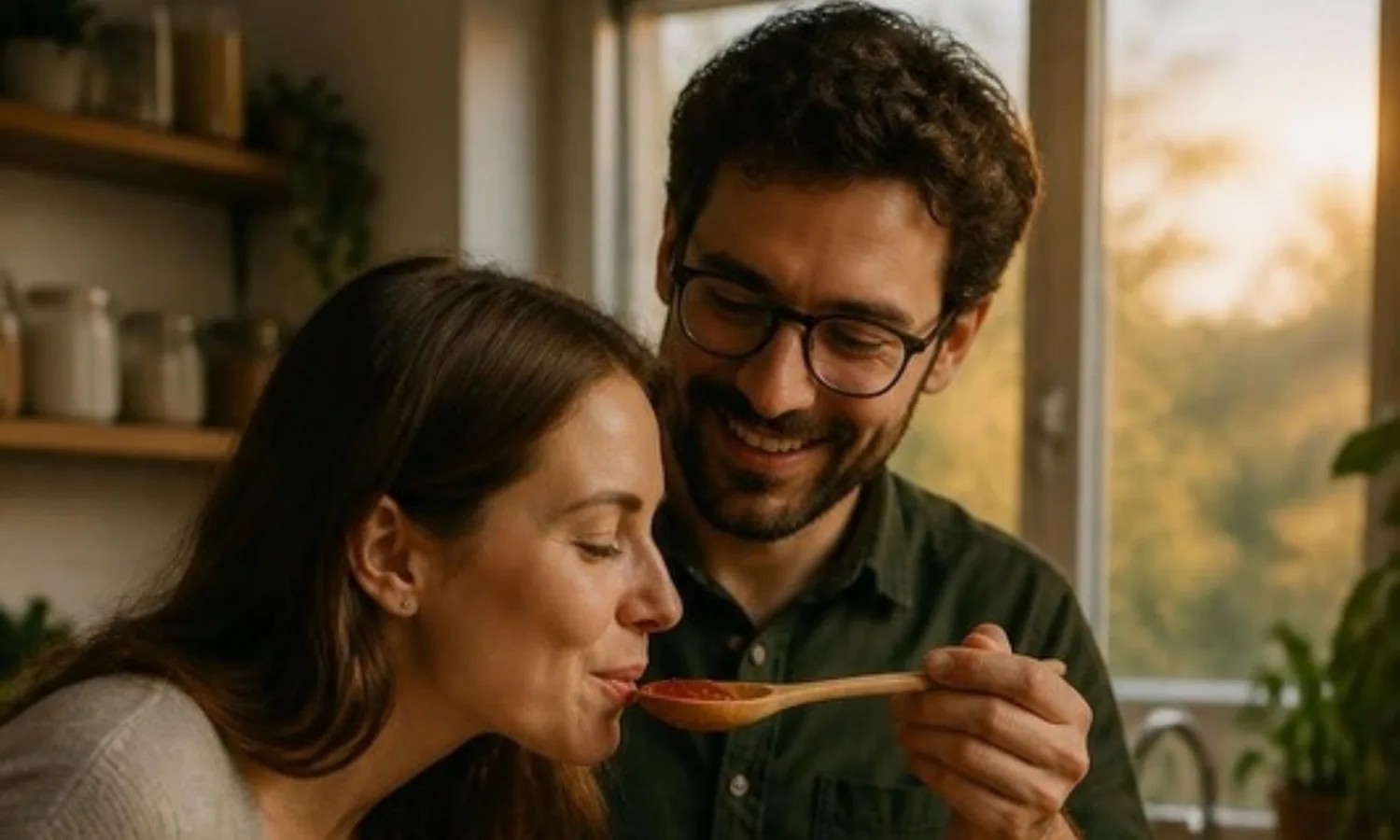
They cooked with the window open and the radio low. Marta chopped the onion into small pieces, the way her grandmother did. André stirred the pot and tasted every minute, always sure something was missing.
“She always stirred in the same direction,” Marta remembered suddenly. “And she hummed, without knowing the words to any song.” André passed her the spoon, and she stirred in the same direction and hummed. Her eyes filled, but this time it was the kind of crying that does you good.
The first taste was too salty. The second, too sweet. At the third, they were both silent, looking at each other, the spoon still between them.
Sunday Dinner
It wasn't exactly her grandmother's sauce. It was better in some ways, worse in others, and entirely theirs. They ate at the kitchen table, among the boxes, and had seconds twice.
Before bed, Marta took a pen and wrote in the margin, next to her grandmother's handwriting: Marta and André, November 1. Less salt. More conversation.
From then on they cook one page of the notebook a month, noting in the margin what changes. They discovered that some recipes hold far more than ingredients: they hold a person's way of being present, and they teach two people to be present for each other.